

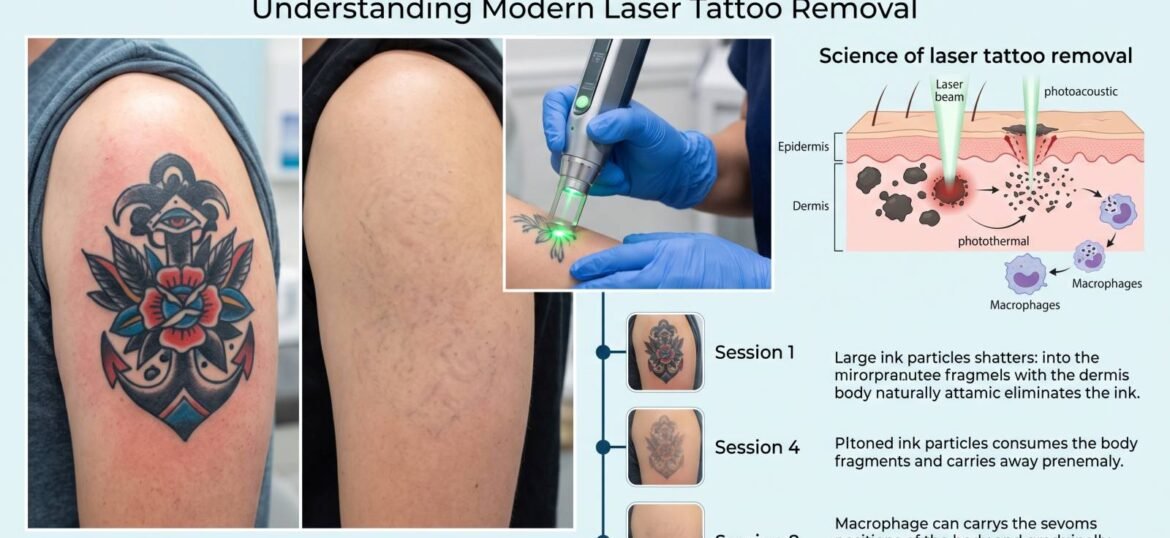
We change. Our tastes change, our beliefs shift, and the version of us who chose a tattoo ten or fifteen years ago isn’t always the version we are today. That’s completely normal, and it’s one of the most common reasons people walk through our doors: not out of regret exactly, but out of growth.
For a long time, “permanent” really did mean permanent. Tattoo removal existed, but it was slow, painful, and often left more scarring than the tattoo itself. Technology has changed that story completely. Today, removal is faster, more precise, and far more comfortable than most people expect.
How Laser Tattoo Removal Actually Works
Modern tattoo removal relies on lasers that break tattoo ink into tiny particles, small enough for the body’s own immune system to absorb and clear away naturally. Two main technologies lead the field right now, and understanding the difference helps explain why results vary from clinic to clinic.
| Technology | How It Breaks Down Ink | Best For | Typical Sessions Needed |
|---|---|---|---|
| Q-switched laser | Uses nanosecond pulses; ink absorbs light as heat, which fractures the pigment | Dark inks like black and blue; a proven, widely used standard | Often more sessions for stubborn colors |
| Picosecond laser (e.g., PicoSure, PicoWay) | Uses ultra-short, trillionth-of-a-second pulses that create a mechanical shattering effect rather than relying mainly on heat | Stubborn colors like green and blue, and clients who want fewer visits | Generally fewer sessions with less heat-related irritation |
Neither technology works instantly, and that’s by design. Ink sits deep in the skin, and the body needs time between sessions to clear each round of broken-down pigment. A clinic that promises a tattoo will disappear in one visit isn’t giving you the full picture — but a clinic using the right technology, spaced correctly, can shorten that timeline significantly compared to just a few years ago.
The Comfort Side: Numbing and Cooling Technology
Pain used to be the biggest reason people put off tattoo removal. That’s changed too. Clinics now use a combination of tools designed specifically to keep sessions comfortable:
- Topical or injectable numbing, applied before treatment so the area is desensitized before the laser ever touches it.
- Cooling patches applied during treatment, which sit over the skin and help distribute the laser’s energy more evenly while reducing the sensation of heat.
- Post-session cooling, which calms the skin immediately after a session and reduces swelling in the first few hours.
None of this means a session feels like nothing — but it means most clients describe the sensation as manageable, not something to dread.
Healing Faster: What Aftercare Patches Actually Do
The days right after a session matter just as much as the session itself. This is where healing patches come in — a newer addition to aftercare that most people haven’t heard of yet.
| Healing Factor | What the Patch Does | Why It Matters |
|---|---|---|
| Moisture barrier | Keeps the treated area hydrated instead of drying out | Dry skin heals slower and is more prone to irritation |
| Cooling and soothing | Reduces the burning sensation in the hours after treatment | Makes the first day noticeably more comfortable |
| Protection | Creates a barrier against bacteria and cross-contamination | Lowers the risk of infection during the most vulnerable healing window |
| UV shielding | Blocks a high percentage of UV exposure while worn | Sun exposure on treated skin can affect pigmentation and slow healing |
Combined with simple habits — staying hydrated, avoiding sun exposure, and not picking at the treated area — this kind of aftercare shortens recovery time and helps the skin heal cleanly between sessions.
Why the Technology Matters More Than the Promise
It’s tempting to choose a clinic based on price or speed alone, but tattoo removal is still a skin treatment, and skin doesn’t respond well to shortcuts. The right combination of laser technology, numbing method, and aftercare protocol is what actually determines your comfort, your results, and how your skin looks once treatment is complete.
At Beauty House 24h, we use advanced, up-to-date removal technology paired with numbing and healing protocols designed to keep every session as safe and comfortable as possible. Every tattoo is different — different ink, different depth, different skin — so every treatment plan starts with a real evaluation, not a one-size-fits-all promise.
If you’ve been thinking about starting your removal journey, you can book your appointment directly through Beauty House 24h or reach out to our team with any questions before your first visit.
Frequently Asked Questions
Does laser tattoo removal hurt? Most clients describe it as uncomfortable rather than unbearable, especially with modern numbing and cooling methods used before and during treatment. Sensation levels vary by person, tattoo location, and ink density.
How many sessions does it take to remove a tattoo? It depends on the ink colors, depth, and the technology used. Picosecond lasers often require fewer sessions than traditional Q-switched lasers, but most tattoos still need multiple sessions spaced several weeks apart to allow the skin to clear each round of broken-down ink.
What should I do after a tattoo removal session? Keep the area clean, avoid direct sun exposure, and avoid picking at any scabbing or flaking skin. Modern healing patches can speed up recovery by keeping the area moisturized, cooled, and protected during the first few days.
Is tattoo removal safe for all skin types? Most modern lasers are designed to treat a wide range of skin tones safely, but the right settings depend on your specific skin and ink. A proper consultation before treatment is the best way to confirm the safest approach for you.